Education

Bloating Relief Explained: How Aloe Vera May Support Digestion

Imagine aloe vera’s gel slipping over irritated intestines and bloated bellows like a soothing balm — easing inflammation and sweeping out trapped gas (without the crash of harsher remedies). Its star player, acemannan, can help feed good bacteria while calming spasms, helping some people feel lighter and less “stuffed” after consistent use. Some research in IBS populations show a noticeable decrease in bloating discomfort. In this article, we break down how bellies get bloated, and aloe’s potential role in providing real relief.   Understanding How Bloating Works  You’ve just finished a light lunch, maybe a salad or smoothie, yet your jeans...

Read more


Can Aloe Vera Support Nicotine Recovery? A Look at the Science and Mechanisms

When it comes to nicotine, recovery is not just about willpower. It is about restoring balance in the brain, calming inflammation in the body, and supporting systems that were chronically stimulated. There is emerging discussion in the scientific literature around aloe’s bioactive compounds and how they may support systems affected by nicotine exposure. Here is what we know.  Oxidative Stress and Antioxidant Support Nicotine increases oxidative stress. It promotes the production of reactive oxygen species, which can damage cells and contribute to inflammation, vascular strain, and tissue dysfunction. Aloe vera contains: Polyphenols Vitamins such as C and E Flavonoids Polysaccharides...

Read more


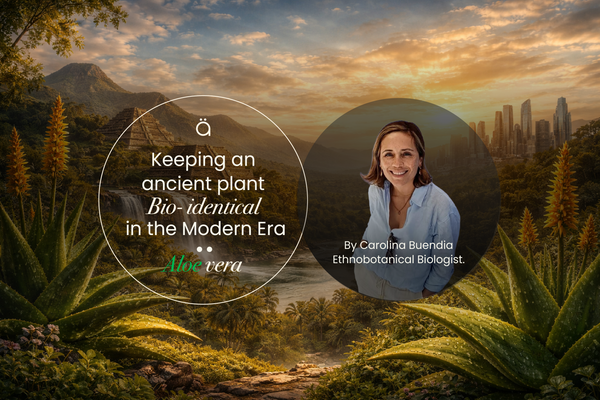
Keeping an Ancient Plant Bioidentical in the Modern Era: Aloe Vera

For millennia, Aloe Vera has accompanied human societies as medicine, symbol, and daily remedy. Its persistence across cultures is not accidental. From an ethnobotanical perspective—the study of relationships between people and plants—aloe’s relevance lies not only in its chemistry, but in how faithfully its natural structure has been respected and preserved over time. From ancient ritual use to modern scientific validation, aloe illustrates a fundamental principle: botanical efficacy depends as much on handling and context as on the plant itself. Origins and Cultural Significance Aloe vera originated approximately 16 million years ago in North Africa and the Arabian Peninsula. Its name...

Read more


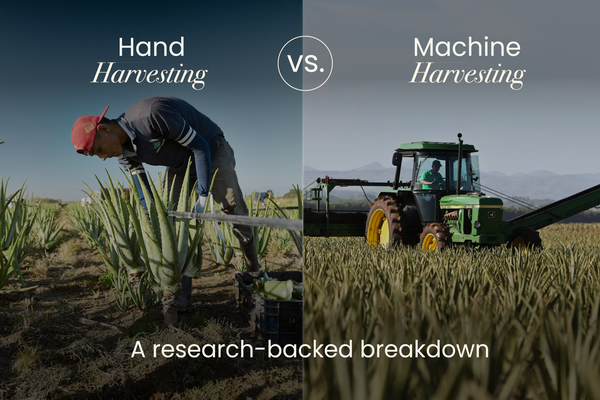
Hand-Harvesting vs. Machine Harvesting Aloe Vera

From ancient healing traditions to modern agriculture, how crops are harvested has always influenced their final quality. For aloe vera, this matters even more. The inner leaf gel is delicate, and how it’s handled during harvesting can affect freshness, oxidation, and the preservation of key bioactive compounds like acemannan. Today, farms use either manual (hand) harvesting or mechanized systems. Each approach has clear tradeoffs in quality, efficiency, and scalability. So which method produces better aloe? Hand Harvesting Aloe Hand harvesting involves trained workers selecting and cutting aloe leaves individually at the right stage of maturity. This method prioritizes precision, care,...

Read more