

Aloe Vera Benefits Backed by Science
Aloe vera has been used for centuries, but modern research is now uncovering how it actually benefits the body. From gut health to immune balance, the key lies in preserving its bioactive compounds, especially acemannan.
At almä, every batch is tested to confirm these compounds are present. This means you’re getting aloe in its most active, research-backed form.
Table Of Contents
Gut & Digestive Health
A healthy gut is the foundation of whole-body wellness. Aloe vera acts as a natural prebiotic, helping support beneficial bacteria and digestive balance.
- Supports growth of beneficial gut bacteria
- Helps reduce bloating and digestive discomfort
- Promotes regularity and gut lining integrity
Read more:


Detox & Cleansing
Aloe supports the body’s natural detox pathways without harsh stimulation. Its plant compounds help bind and eliminate unwanted substances.
- Contains fibers like LM pectin that help bind heavy metals
- Supports liver and kidney function
- Helps reduce overall toxic burden
Immunity & Inflammation
Your immune system is closely tied to your gut. Aloe helps support immune balance by nourishing the microbiome and calming inflammation.
- Supports immune system function through gut health
- Helps maintain a healthy inflammatory response
- Supports resilience to everyday stressors
Read more:



Blood Sugar & Metabolism
Aloe vera may help support metabolic health by influencing how your body processes nutrients and glucose.
- Helps slow glucose absorption
- Supports stable energy levels
- Contributes to healthy cholesterol metabolism
Hormones & Menopause
Hormonal changes can impact everything from mood and energy to skin and overall comfort. Aloe vera may help support the body during these transitions by promoting balance at the cellular and tissue level.
- Supports hydration and tissue integrity during hormonal shifts
- Helps maintain collagen, skin elasticity, and mucosal comfort
- Supports inflammation balance linked to hormonal changes



Cellular Regeneration & Skin Support
Aloe’s bioactive compounds support your body’s natural repair processes, including collagen production and tissue regeneration.
- Acemannan supports fibroblast activity
- Promotes collagen and elastin production
- Supports skin health and tissue repair
Brain & Cognitive Support
Aloe’s impact on inflammation and metabolic balance may indirectly support brain function and mental clarity.
- Supports inflammation balance linked to cognitive health
- Helps stabilize energy levels for focus
- May support long-term brain health through metabolic pathways



Athletic Recovery
Aloe supports recovery through inflammation modulation and nutrient absorption.
- Helps support post-workout recovery
- Supports hydration and nutrient delivery
- May reduce exercise-related inflammation
Bladder / IC Support
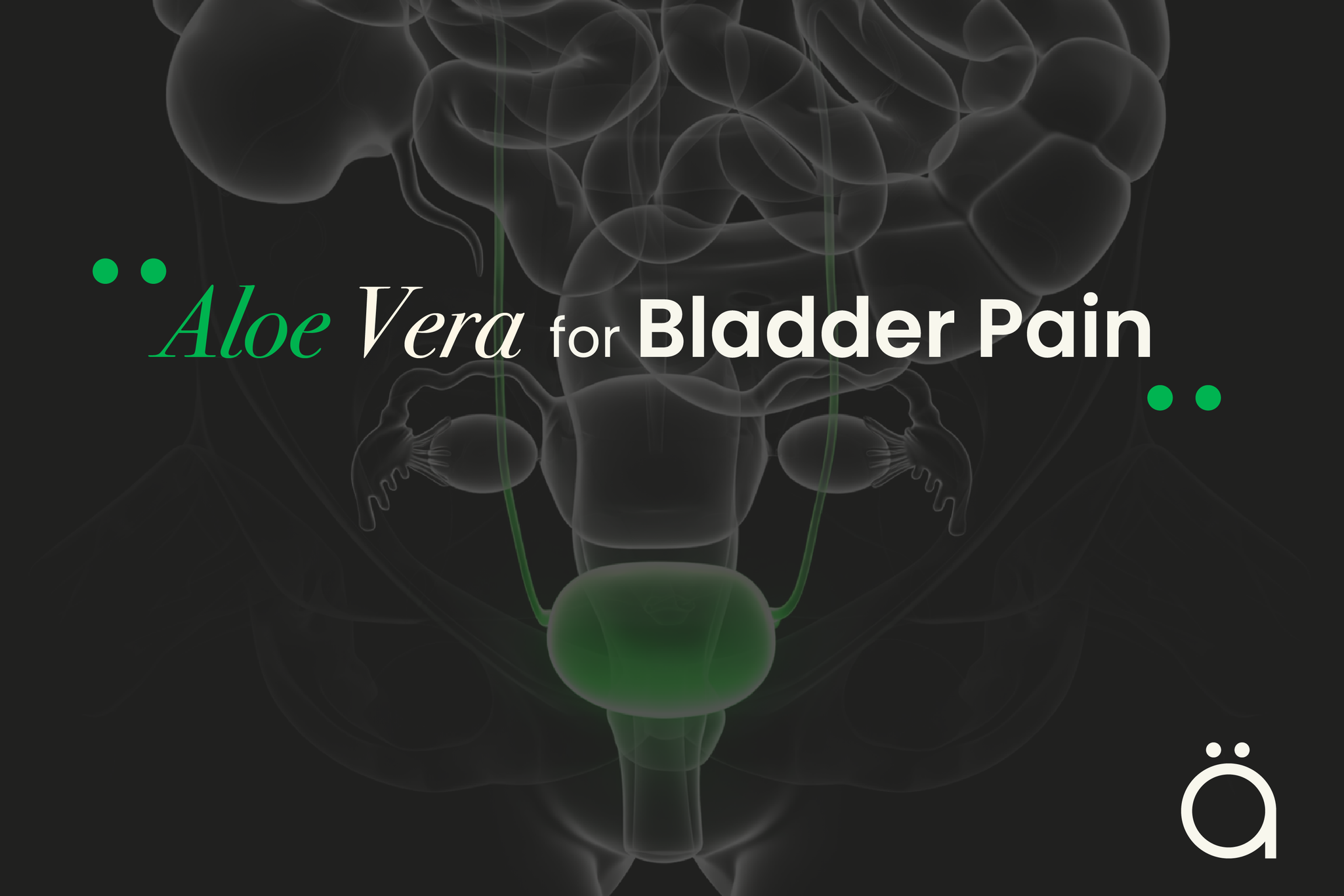
Aloe is commonly explored for soothing effects in the urinary tract.
- Supports bladder lining integrity
- Helps reduce irritation
- May support comfort in IC-related symptoms

Benefitting From Aloe Vera
Deriving potential benefits from aloe vera requires the plant to be grown, processed, and extracted properly. Most products on the market contain little to no measurable bioactivity because the fragile compounds are often overheated, diluted, or improperly filtered.
At almä, independent university labs and batch-testing verify the actual presence of these compounds in every serving. This verification does not mean almä treats or cures health conditions; it simply confirms that the plant molecules shown in research are present in their natural form, allowing you to choose a product rooted in real, measurable aloe integrity rather than marketing claims.
Frequently Asked Questions
Citations
- Egger, Sarah. 2020. “The Effect of Aloe Vera on Gut Microbiota and Health.” Honors Theses, University of Mississippi.
https://egrove.olemiss.edu/cgi/viewcontent.cgi?article=3962&context=hon_thesis.
- Harlev, Eran, Tali Nevo, Rachel Lansky, Marianne Ofir, and Solomon P. Bishayee. 2013. “Anticancer Potential of Aloes: Antioxidant, Antiproliferative, and Immunomodulatory Attributes.” Pharmacology & Therapeutics 138 (1): 75–95. https://www.sciencedirect.com/science/article/abs/pii/S0161589013001739.
- Lankaputhra, Weerasinghe E. V., and Nadeesha Wickramanayake. 2014. “Aloe Vera as a Prebiotic Agent to Promote the Growth of Beneficial Gut Bacteria.” Journal of Microbiology and Biotechnology Research 4 (6): 52–56. https://pubmed.ncbi.nlm.nih.gov/25504136/.
- Pandey, Pooja, and Anil K. Verma. 2018. “Therapeutic Role of Aloe Vera in Irritable Bowel Syndrome: A Systematic Review.” Journal of Clinical and Diagnostic Research 12 (8): OE01–OE04. https://pmc.ncbi.nlm.nih.gov/articles/PMC6175553/.
- Rokaya, Megha, and Siti S. Alrumman. 2020. “LM Pectin as a Chelating Agent for Heavy Metal Detoxification.” Procedia Environmental Science, Engineering and Management 7 (4): 703–709. https://procedia-esem.eu/pdf/issues/2020/no4/8_60_Zhexenay_20.pdf.
- Wang, Hong, and Qiu Chen. 2021. “Linking Gut Microbiota and Immune System: The Therapeutic Role of Aloe Vera.” Frontiers in Immunology 12: 8001875. https://pmc.ncbi.nlm.nih.gov/articles/PMC8001875/.
- Yamazaki, Keiko, and Takashi Sato. 2005. “Aloe Vera Extract Enhances Intestinal Absorption of Vitamin E and Other Nutrients.” Toxicology in Vitro 19 (7): 991–996. https://www.sciencedirect.com/science/article/abs/pii/S0944711305000656.
- Chithra, Pushpa, G. Sajithlal, and G. Chandrakasan. 1998. “Influence of Aloe Vera on Collagen Characteristics in Healing Dermal Wounds.” Molecular and Cellular Biochemistry 181 (1–2):71-76. https://link.springer.com/article/10.1023/A:1006813510959
- Qiu, Zuojian, Zuojian, Zhixin Xie, and Lisheng Wang. 2022. “Acemannan Promotes Human Dermal Fibroblast Proliferation and Collagen Production.” International Journal of Biological Macromolecules 203: 551–560. https://pubmed.ncbi.nlm.nih.gov/35033594/.
Frequently Asked Questions
Acemannan is the active polysaccharide in aloe vera, known for its soothing, immune-supporting properties, as well as its role in supporting digestive health.
Yes, acemannan has properties that help soothe and protect the digestive mucosa, which is why many people search for it specifically for gut health concerns.
At appropriate doses it's generally well tolerated; some people may notice mild digestive discomfort at first.
Dosage varies by product and concentration — always check the specific supplement's label and consult a healthcare professional if you have questions.
Typically in capsule form, with or without food depending on the product; consistency is key to noticing benefits.
Yes, at the recommended doses of a purified, quality product, it's generally considered safe for regular consumption.